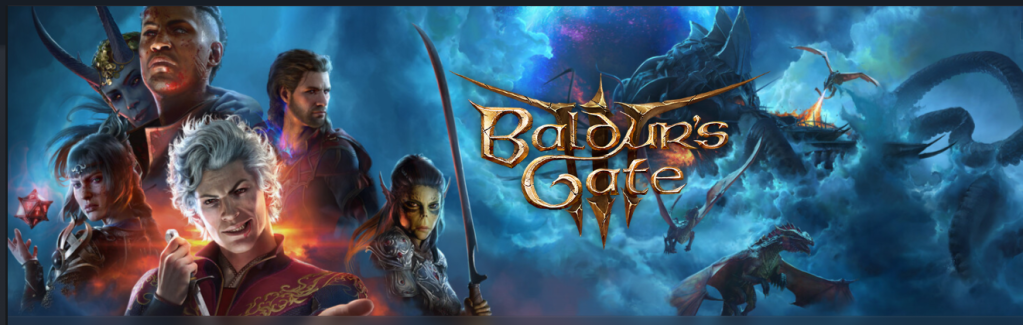
“They each have their own issues to deal with and by extension their own lives, for what is life if not dealing with your own set of problems. This serves only to enhance the central narrative, creating a coalition of desperate and damaged folk brought together by hardship.”
After winning six separate awards, including Game of the Year, at the Game Awards, Baldur’s Gate 3 has made waves on the R.P.G scene, in no small part due to its deft storytelling. The game begins with you captured by mindflayers, tentacle-jawed creatures from another plane of existance. You escape, but that only marks the beggining of your woes. You, and your companions, have been infected by parasites that, if left unchecked, will turn you into the very monstrosities from which you fled. Then there’s a mysterious figure visiting you all in your dreams, pushing you to uncover the source of a new cult that has arisen. As you fight to get your bearings, you are quickly dragged into a conspiracy that promises to threaten not only your new found freedom, but the entire cosmology of Faerûn.
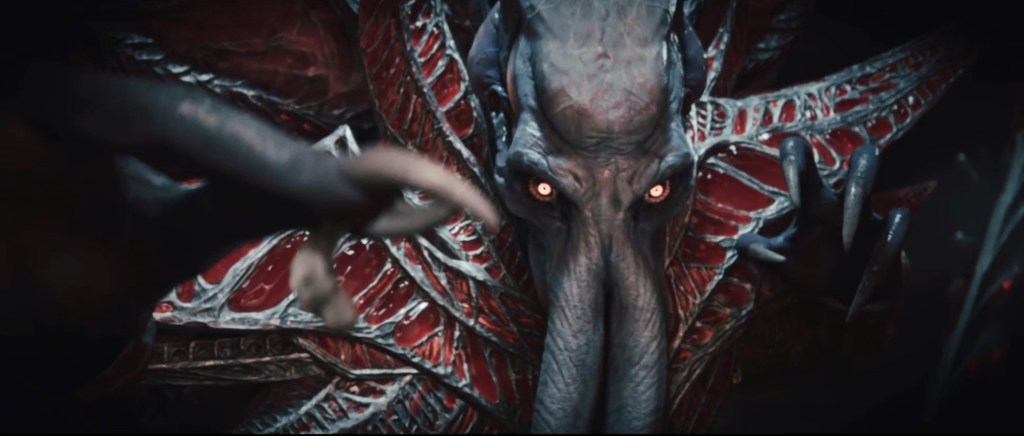
On paper it sounds utterly bombastic and overblown, but BG3 does an stellar job of easing you in. Information is drip fed so that you always knows where you stand, whilst leaving key pieces of the puzzle hovering just beyond your fingertips. So you delve deeper into the conspiracy, finding answers and even more questions as another layer to the puzzle is unveiled, twisting ever downwards towards the climax of your adventure. It is a gripping story, beautifully realised, in a world that is a joy to explore, but where it truely shines is in the design of its characters.
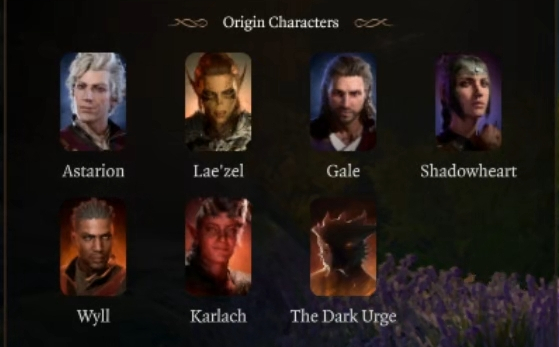
It’s true that Larian is working with some serious writing talent but the way the narrative is structured into around the Origin Characters, preset characters you can play as, takes that talent to new heights. This mechanic comes as a development of the technique first utilised in Larian’s previous title, Divinity: Original Sin 2. Each Origin comes with a bespoke backstory, one that is seamlessly woven into the themes and elements of the wider story. Since this design demands that each companion be complex enough to function as a protagonist, it naturally results in a group of compatriots more developed than R.P.G’s usual stock. They have to be. If my player character isn’t nuanced and complex, if they don’t feel real, then why should I care about their plight?
The characters presented are spread across classes, covering all manner of play styles. Karlach or Lae’zel are great for those who want to charge in with steel glinting. Shadowheart and Gale cover those who want to play spellcasters, specialising in support and offensive respectively and Wyll, the Warlock, is great for for players who want a few different options. Whether you pick to play as one of the preset character’s or chose to play as your own creation, unchosen characters will still appear as as companions, with one exception, allowing you to still experience their stories.
*** SPOILERS AHEAD ***
Take Wyll. In the course of the main plot, Grand Duke Ravengard, is kidnapped by the Cult of the Absolute in order to help sow Chaos and discord in Baldur’s Gate. Reason enough for a heroic group to rescue him but it just so happens that the Grand Duke is also Wyll’s estranged Father. Suddenly the rescue mission becomes less about helping the people of Baldur’s Gate and more about seizing a fraught chance for Wyll to reconnect with his past.
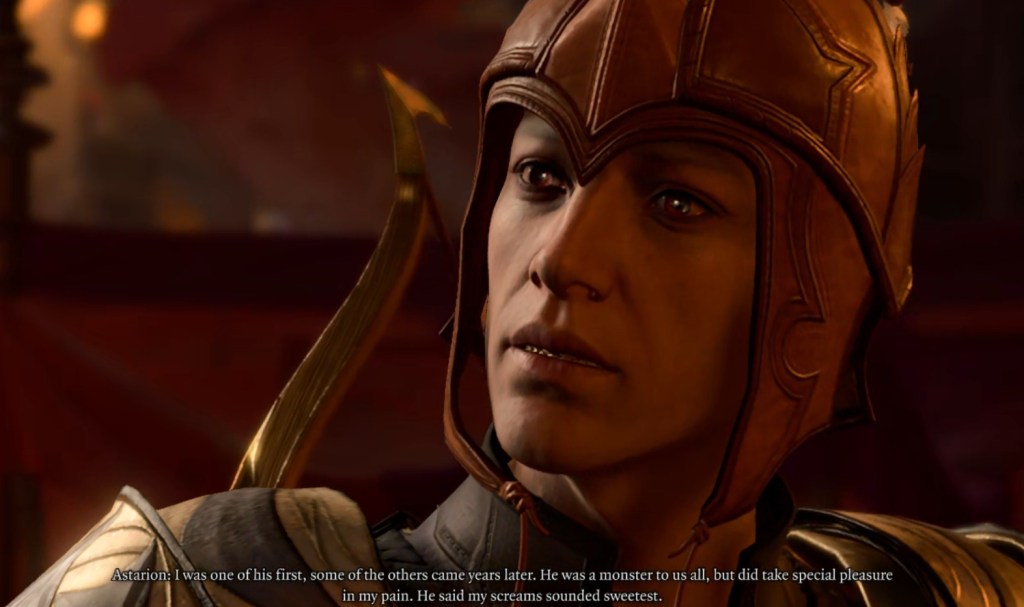
There are similar links for each of the Origin character’s. Cazador, a major villain later in the playthrough, is also the very Vampire that turned Astarion into a fledgling bloodsucker, and the presence of Shar, Shadowheart’s divine patron, can be felt throughout the game.
*** END OF SPOILERS ***
The ties that your companions have to aspects of the plot give your party personal stakes in the different factions and conflicts you encounter. No matter which point you are at in your quest, at least one of your companions is likely to have some level of personal stake in your involvement and it is so beautifully achieved that it never once feels forced. I found myself making the rare decision to switch them around, despite making my party sub-optimal, so that I had the most appropriate team for the narrative.
When writing fiction, characters are the main driving force of the action. Plot is character is a common phrase that gets thrown around a lot, but it is a lesson that video games commonly seem to under appreciate, usually in favour of player agency. Each of the Origins have their own narrative arc running alongside their deadly infections. They are believable, layered, with their own wants and desires.
They each have their own issues to deal with and by extension their own lives, for what is life if not dealing with your own set of problems. This serves only to enhance the central narrative, creating a coalition of desperate and damaged folk brought together by hardship. It is a classic story, heavily soaked in the traditions of Dungeons and Dragons. While you may be calling the shots in your ragtag group, you are are all in it together, which creates a nice counter arguement to all of the ‘chosen one’ narratives that seem to permeate fantasy.
The closest example of another game that does this is the Witcher 3. Geralt is a complex character, with pre-established relations to the world, which in turn allows the writing to engage more closely with his story. When Geralt interacts with folks from his past, the player knows that there is history, conflict, affection and obligation all wrapped up into that one relationship. We may not know all of it but we feel its heavy burden as we’re forced to make decisions that affect these characters. Like-wise, in Baldur’s Gate 3, when Lae’zel finds herself at odds with her fellow Githyanki, the very people she’s be desperate to reunite with since her capture, the tragedy is brought to the forefront because she comes with that pre-established connection to the world.
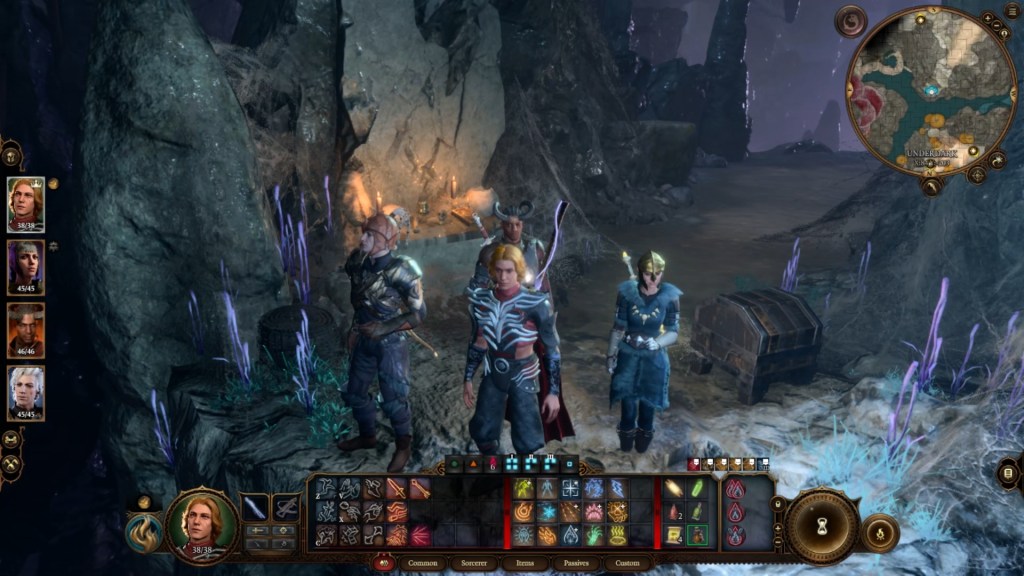
Larian’s approach to writing character’s also has a large impact on the romance sub-plots you may choose to pursue. Regardless of your opinions on them, the ability to take your relationships beyond that friendship has become a staple of the genre, although in many examples, it can often turn into an exercise in jumping through hoops. Slowly earning enough goodwill to earn yourself a steamy cutscene and little else besides a slightly different epilogue.
The complexity of Larian’s design takes the relationships in Baldur’s Gate 3 beyond the simplistic, choose-your-partner approaches that have come before. Your companions have opinions on most actions you take in your adventure, leading to slowly evolving relationships as you progress. But these relationships go beyond far the intimate, presenting partnerships between two individuals. Your relationship with each of the Origin Character, romantic or otherwise, feeds back into their emotional arc as you support them with their problems. They in turn are there for you, as your adventures draw closer to their apex (for this reason, I’m of the opinion that the Dark Urge background is the correct way to play, giving your avatar their own baggage-ridden subplot).
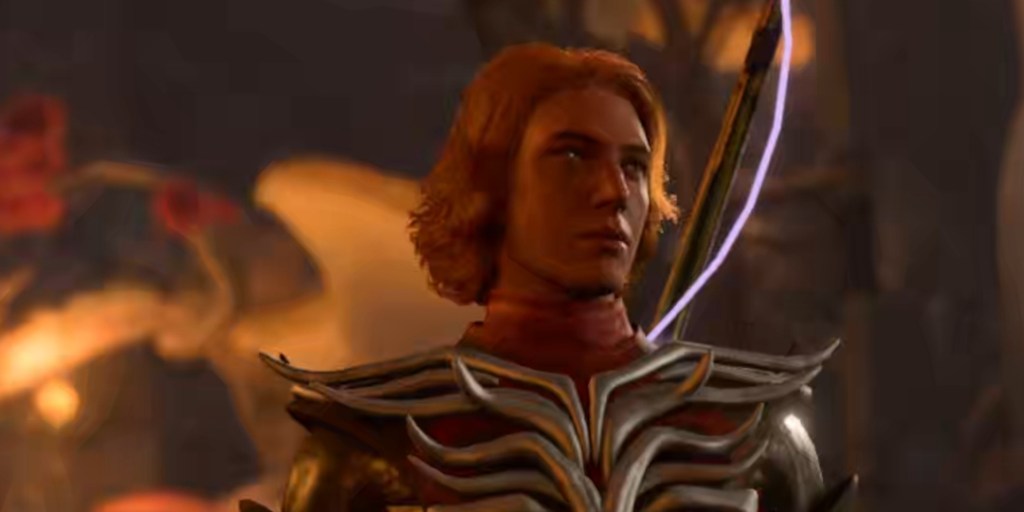
The Companions in Baldur’s Gate 3 form a delightful selection of character’s, all of which I have found myself fully investing myself in, a feat rarely achieved in a party-driven R.P.G. Well-written dialogue and incredible voice acting helps create a strong backbone for the cloth of epic fantasy to rest upon, in all its bejewelled glory, leading to a mature approach to story-telling that I hope signals a new chapter in R.P.G history.




 Elimbwrites.com